From Automation to Innovation: How AI is Reshaping Oman’s Key Sectors
Discover how Artificial Intelligence is moving beyond simple tasks to drive systemic innovation across logistics, energy, and finance in the Sultanate.
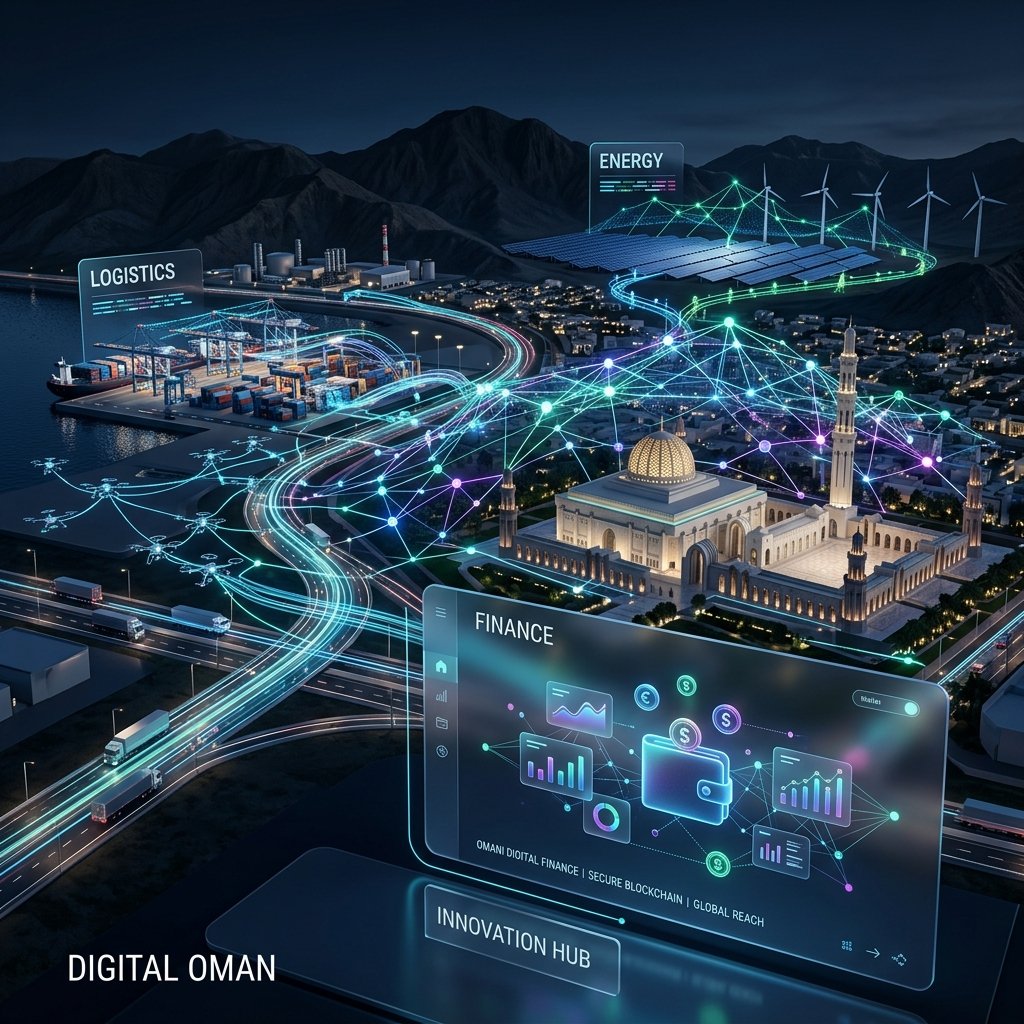
The narrative surrounding Artificial Intelligence often focuses heavily on simple automation—chatbots replacing customer service reps or scripts handling data entry. However, in the Sultanate of Oman, a more profound shift is occurring. Driven by the ambitious diversification goals of Oman Vision 2040, AI is transitioning from a basic tool of automation into a core engine of systemic innovation. Across the nation’s foundational industries—Logistics, Energy, and Finance—AI is not just doing things faster; it is fundamentally changing how things are done, unlocking new revenue streams and unprecedented operational efficiencies.
How Is AI Revolutionizing The Logistics And Supply Chain Sector?
Direct Answer: AI optimizes routing algorithms, predicts port congestion, and automates warehouse management, leading to a 20% reduction in transit times and cementing Oman's status as a premier global logistics hub.
Oman’s strategic geographic location makes logistics a cornerstone of its non-oil economy. Ports like Sohar and Salalah are leveraging AI to manage immense complexities. Instead of relying on static scheduling, AI algorithms analyze real-time variables—weather patterns, shipping traffic, and historical data—to predict port congestion before it happens. For land transport, AI-driven route optimization ensures that truck fleets take the most fuel-efficient paths. This is no longer just about moving boxes; it is about predictive supply chain management that anticipates global market demands.
"In modern logistics, data is just as critical as the cargo itself. AI ensures that data moves faster than the physical goods."
What Is The Impact Of AI On Oman's Energy Sector?
Direct Answer: AI implements predictive maintenance on critical infrastructure, reducing unplanned downtime by up to 40%, while also optimizing the grid distribution of emerging renewable energy sources.
The energy sector in Oman is undergoing a dual transformation: optimizing legacy oil and gas operations while rapidly scaling renewable energy sources like solar and wind. Artificial Intelligence plays a crucial role in both. On oil rigs and refineries, AI analyzes sensor data (IoT) to detect microscopic anomalies in machinery vibration or temperature, predicting equipment failures weeks before they occur. This predictive maintenance saves millions in unplanned downtime. Simultaneously, as Oman integrates solar power, AI manages the complex task of balancing variable renewable energy inputs with the national grid’s steady demand.
How Are Financial Institutions Leveraging AI For Growth?
Direct Answer: Omani banks are utilizing AI for real-time fraud detection, algorithmic credit scoring, and hyper-personalized wealth management, reducing operational costs by 30% while increasing transaction security.
The financial sector in Muscat is adopting AI at a blistering pace. Traditional, rule-based fraud detection systems generate too many false positives and are easily bypassed by sophisticated cybercriminals. AI models, however, analyze transaction patterns in milliseconds, identifying fraudulent behavior based on deviations from a user's unique financial habits. Furthermore, AI is revolutionizing credit scoring. Instead of relying solely on historical financial records, AI can analyze alternative data points to assess the creditworthiness of SMEs and individuals, expanding access to capital for a broader segment of the Omani population.
Here is a breakdown of how AI is transforming these three critical sectors:
| Sector | Traditional Approach | AI-Driven Innovation | Primary Business Impact |
|---|---|---|---|
| Logistics | Static route planning; Reactive maintenance | Predictive congestion modeling; Dynamic routing | 20% faster transit; 15% lower fuel costs |
| Energy | Scheduled maintenance; Manual grid balancing | Predictive failure analysis; Automated grid optimization | 40% less downtime; Efficient renewable integration |
| Finance | Rule-based fraud checks; Manual credit review | Behavioral anomaly detection; Algorithmic scoring | 30% operational cost reduction; High security |
How Can Your Business Participate In This Innovation Wave?
Direct Answer: Start by centralizing your business data into a clean, accessible format, then partner with specialized AI consultants to deploy targeted, cloud-based predictive models tailored to your specific industry needs.
The misconception is that this level of innovation is reserved solely for government entities and multi-billion-dollar corporations. The reality is that cloud computing and AI APIs have democratized access to these technologies. A mid-sized logistics firm in Muscat can now utilize the same predictive routing algorithms as global shipping giants without needing to build a server farm or hire a team of PhD data scientists. The first step is acknowledging that AI is not a future possibility; it is a present reality reshaping the Omani economy. Businesses that embrace this shift from basic automation to deep innovation will lead their respective sectors into the next decade.
Frequently Asked Questions
How is AI transforming the logistics sector in Oman?
AI optimizes supply chain routes, predicts port congestion at places like Sohar Port, and automates warehouse inventory, leading to a 20% reduction in transit times.
What role does AI play in Oman's energy sector?
In the energy sector, AI is used for predictive maintenance on oil rigs and to optimize the grid distribution of renewable energy, preventing costly downtimes.
How are Omani banks utilizing Artificial Intelligence?
Banks use AI for real-time fraud detection, algorithmic credit scoring, and personalized customer service via chatbots, reducing operational costs by up to 30%.
Is AI adoption limited to large corporations in these sectors?
No. Cloud-based AI APIs allow SMEs in logistics, retail, and finance to access the same predictive analytics capabilities previously reserved for multi-national corporations.
How does AI support Oman Vision 2040 in these key sectors?
By increasing efficiency and driving innovation, AI helps transition the economy away from oil dependence toward a diversified, knowledge-based digital economy.
Can AI help with predictive maintenance in manufacturing?
Yes, IoT sensors combined with AI analyze vibration and temperature data to predict machine failures before they happen, saving millions in repair costs.
What is the impact of AI on employment in Oman's key sectors?
While AI automates repetitive tasks, it creates a high demand for data analysts, AI operators, and strategic roles, shifting employment toward higher-value knowledge work.
Are there local AI startups in Oman addressing these sector needs?
Yes, a growing ecosystem of local tech startups, supported by government initiatives, is developing specialized AI solutions tailored for the GCC logistics and energy markets.
How does AI improve sustainability in Oman?
AI optimizes energy consumption in smart buildings and improves the efficiency of solar farms, directly contributing to Oman's environmental sustainability goals.
What is the ROI for a logistics company implementing AI route optimization?
Logistics companies typically see a 15-25% reduction in fuel costs and a 30% increase in delivery capacity within the first six months of implementing AI routing.
Lead the Innovation Wave in the GCC
Are you ready to transform your sector with predictive AI? Join industry pioneers and technology experts at upcoming GCC Business Forums to learn how to deploy systemic innovation in your enterprise.
Discover MoreReferences
Ready to Automate Your Business Operations?
AI Profit Lab helps non-technical managers in Oman and the GCC deploy custom AI solutions, automated customer service systems, and real-time dashboards to slash overhead costs and eliminate manual busywork.
Book a Free 30-Minute AI Consultation